
If you’re wondering what is an aerogel blanket insulation, here’s your answer: an aerogel blanket insulation is a flexible thermal insulation material made by embedding nanoporous aerogel — usually silica-based — into a fiber-reinforced mat, producing a thin, lightweight blanket that provides extremely effective thermal insulation. It combines the ultralow thermal conductivity of aerogel with the flexibility and mechanical strength of a blanket form factor, making it ideal for insulating hot or cold surfaces in many contexts. In this guide, we explore what aerogel is, how aerogel blankets work, their benefits and applications, comparisons to traditional insulation, and practical advice for selection.
Aerogel blankets derive from the broader class of materials known as aerogels. So first: what is aerogel? Aerogel is a synthetic, highly porous solid — often made from silica — created by replacing the liquid component of a gel with gas, leaving behind a solid matrix that is up to 99% air by volume.
When manufacturers combine this silica aerogel with a reinforcing fiber mat, the result is a flexible, durable sheet: the aerogel blanket. The blanket preserves the nanoporous structure of aerogel while adding mechanical integrity, shape retention, and easier handling.
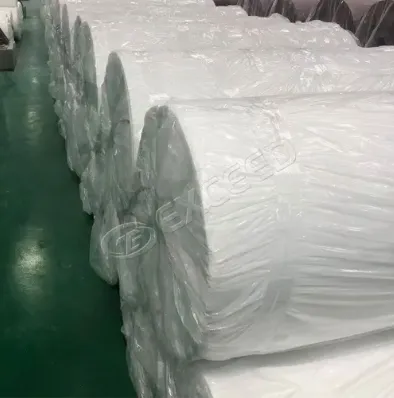
The secret behind aerogel’s thermal insulation lies in its structure. The nano-scale pores trap air and drastically reduce pathways for heat conduction or convection. Because only a tiny fraction of the volume is solid silica and the rest is air confined in nanopores, both solid conduction and gas-phase conduction are extremely suppressed.
As a result, silica aerogel insulation achieves thermal conductivities significantly lower than most solid insulation materials, making them among the most effective thermal insulators available. Its solid nanostructured composition retains insulation performance even under high temperature or varying humidity, especially when hydrophobic and moisture-resistant.
Aerogel thermal insulation delivers performance several times better than traditional insulation materials. Many aerogel blankets offer thermal conductivity around 0.015–0.022 W/m·K at ambient conditions. Because of this low conductivity, a much thinner layer can achieve the same or better thermal resistance compared to conventional insulation. Some aerogel blankets achieve equal insulation with just one-fifth to one-third of the thickness required by traditional materials.
Because aerogel is extremely low-density, the resulting aerogel blanket remains very light. The reinforcing fiber matrix allows the blanket to bend around complex shapes — such as pipes, ducts, tanks, or curved surfaces — making installation easier and more versatile than rigid insulation boards.
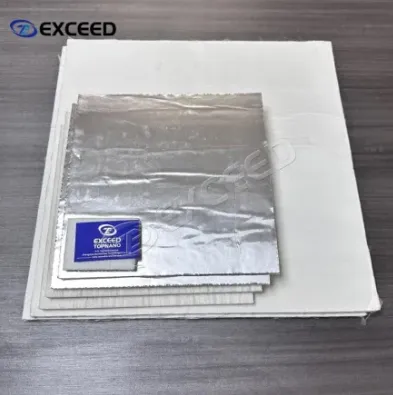
Because you don’t need thick insulation layers to achieve good thermal resistance, aerogel blankets are ideal where space is limited. The thin profile allows insulation of pipelines, ducts, and equipment in compact industrial installations or retrofit contexts without significantly increasing overall dimensions.
Many silica-based aerogel blankets exhibit excellent fire resistance and are often rated Class A (non-combustible). They also tend to be hydrophobic, preventing moisture absorption, avoiding performance degradation, and reducing risks related to corrosion under insulation. Furthermore, because silica aerogel is inorganic and does not rely on blowing agents or harmful chemicals, it is considered environmentally friendly and safe for long-term use.
Thanks to its nanostructured composition, aerogel blanket insulation shows strong thermal stability across wide temperature ranges. Many products remain effective from cryogenic temperatures (as low as –200 °C) up to high temperatures around 650 °C. The fiber-reinforced blanket has good mechanical strength, compressive resilience, and resistance to deformation or cracking, even under pressure or over long-term use.
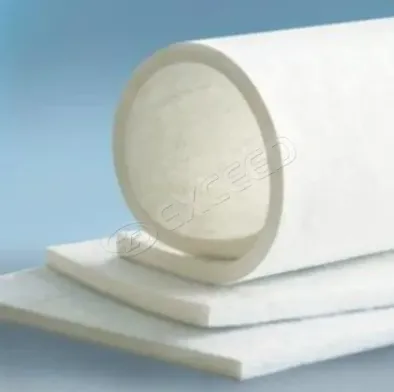
In buildings, aerogel blankets can insulate walls, roofs, ceilings, floors, and partitions. Their thin profile makes them especially useful in retrofit projects where thickness space is limited. They can provide efficient thermal insulation, helping reduce energy consumption for heating or cooling, improving thermal comfort, and increasing building energy efficiency. Their fire resistance and hydrophobicity also contribute to enhanced safety and durability in construction settings.
Aerogel blanket insulation is widely used in oil & gas, petrochemical, power generation, and chemical industries. It is applied to pipelines, tanks, reactors, flue ducts, heat exchangers, and other equipment to reduce heat loss, maintain process temperatures, and improve energy efficiency. Their ability to withstand high temperatures and resist moisture, corrosion, and fire makes them ideal in harsh industrial environments. In cryogenic applications, specially designed aerogel blankets maintain excellent insulation even at extremely low temperatures.
Because aerogel blankets are thin, flexible, and easy to cut/install, they are particularly suited for retrofitting existing buildings or industrial installations where adding thick insulation is impractical. This makes them attractive for energy-efficiency upgrades, renovation of older infrastructure, or space-constrained installations.
Beyond typical building or industrial insulation, aerogel blankets have found use in aerospace, transportation, cryogenics, cold storage, and other niche systems where lightweight, high-performance insulation matters.
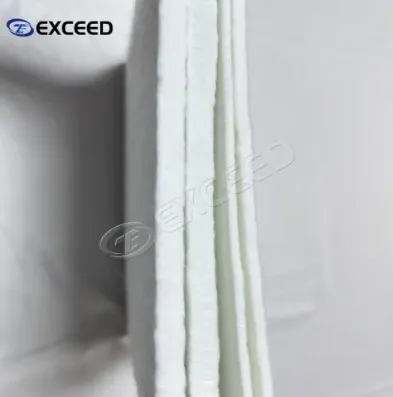
Polyurethane foam has been a common insulation material for many years. Compared to aerogel blanket insulation, aerogel blankets are much lighter, offer 3–5 times better insulation allowing thinner layers for the same R-value, and are more suitable for space-constrained applications. Aerogel blankets also handle wider temperature ranges and are generally more fire- and moisture-resistant. The main trade-off is cost, but for applications requiring high performance, safety, or space saving, aerogel blankets often justify the premium.
Traditional fiberglass or mineral wool insulation is widely used. Compared with these materials, aerogel blankets achieve far lower thermal conductivity, providing better insulation per unit thickness. Aerogel blankets are hydrophobic and non-combustible, and their fiber-reinforced nature gives mechanical stability and longevity. Fiberglass remains cheaper, but aerogel blankets excel when high performance, thin profile, or harsh conditions matter.
When selecting an aerogel blanket for a specific project, consider: thermal conductivity, operating temperature range, thickness and space constraints, flexibility, fire rating, moisture resistance, and durability. Ensure the blanket meets your project’s specific requirements and environmental conditions.
For residential or commercial building insulation, aerogel blankets are best if space is limited, thermal efficiency is important, moisture or fire safety matters, or long-term durability is desired. For simple new builds with ample space, traditional insulation may remain more cost-effective.
For industrial, petrochemical, cryogenic, or high-temperature applications, verify thermal conductivity across temperature range, confirm hydrophobicity, check mechanical stability, and ensure installation ease. Prefer high-quality fiber-reinforced silica aerogel blankets for long-term reliability and performance.
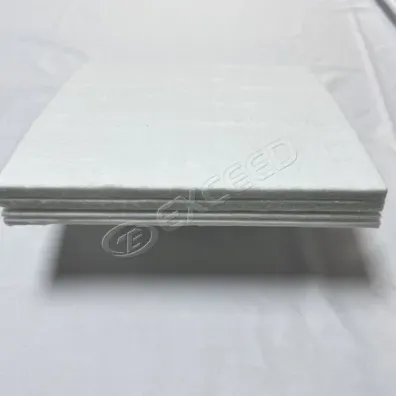
Aerogel insulation blankets are used for insulating pipelines, tanks, reactors, ducts in industrial settings; insulating walls, roofs, ceilings in buildings; insulating cold storage, cryogenic tanks, and refrigerated containers; providing fire-safe, thin-profile insulation; and retrofitting older infrastructure.
Silica-based aerogel blankets are inorganic, non-combustible, hydrophobic, and dimensionally stable. Properly installed and used within their specifications, they can last for decades without significant degradation.
Yes — many aerogel blankets are Class A rated, hydrophobic, and chemically inert, making them suitable for residential or commercial use, particularly where fire safety and moisture resistance matter.
Absolutely. Aerogel blanket insulation provides strong thermal protection even at small thicknesses, making it ideal for retrofit projects, narrow walls, pipes, ducts, or areas where bulk insulation isn’t practical.
Aerogel blanket insulation represents a remarkable leap in thermal insulation technology. By combining the ultralight, nanoporous structure of silica aerogel with a flexible, fiber-reinforced blanket form, it offers unmatched thermal performance, space savings, lightweight installation, fire resistance, moisture resistance, and broad temperature range - features that traditional insulation materials struggle to match.
Whether for high-temperature industrial equipment, cryogenic systems, energy-efficient buildings, or retrofit projects constrained by space, aerogel blankets deliver powerful advantages. When considering insulation solutions, especially where performance, space, safety, and longevity matter, aerogel blankets often emerge as the superior choice. what is a aerogel blanket insulation? It is arguably the most advanced, efficient, and versatile insulation solution available today.


